A project can lose money long before the concrete is poured. One delayed excavator, one underpowered mixer, or one idle machine sitting on site for weeks can quietly drain margins. That is why equipment rental for construction projects has become a strategic decision for developers, contractors, and investors who want to build with greater control, flexibility, and confidence.
Across fast-growing markets such as Cameroon and the wider African real estate space, construction timelines are shaped by cash flow, site conditions, logistics, and changing project scope. In that environment, owning every machine is not always a mark of strength. In many cases, the stronger position is to rent the right equipment at the right stage, preserve capital, and keep the project moving without carrying unnecessary asset burdens.
Why equipment rental for construction projects makes financial sense
Construction is capital intensive. Funds are needed for land, approvals, labour, materials, design adjustments, transport, and compliance. When too much capital is tied up in machinery purchases, developers often reduce their room to respond to real project demands. Rental changes that equation.
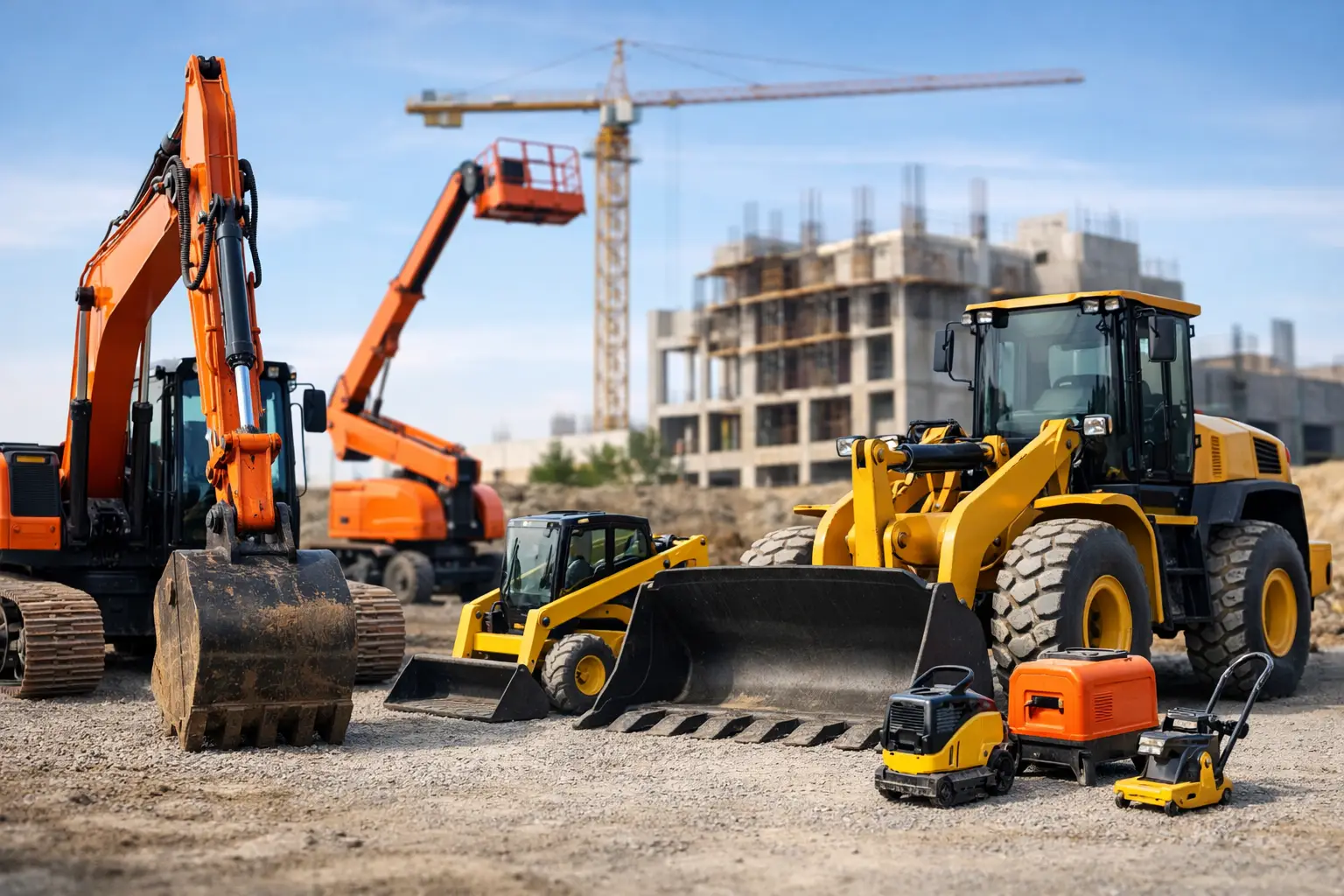
Instead of making a large upfront purchase, the contractor or developer can spread cost over the period the equipment is actually needed. That matters on projects where demand is phase-based. An excavator may be essential during site preparation, but it may have little value once foundations are complete. A compactor, concrete mixer, scaffold system, or generator may also be needed for a specific window rather than for the full life of the project.
This does not mean buying is always the wrong choice. If a contractor uses the same machine continuously across multiple sites, ownership can become more economical over time. But for many property developers, private builders, and mid-sized contractors, rental protects liquidity and keeps capital available for the areas that directly increase project value.
The operational advantage of renting instead of owning
The financial argument is only part of the story. The larger benefit is operational discipline. Equipment should serve the project plan, not dictate it.
When equipment is rented, teams can match machine type and size to the actual task. A dense urban site with limited access may need smaller, more manoeuvrable equipment. A larger out-of-town development may justify heavier machines with higher output. Renting allows that adjustment without forcing a one-size-fits-all approach.
There is also the issue of maintenance and downtime. Owned equipment requires servicing, storage, transport management, operator oversight, and replacement planning. If the machine breaks down, the cost is not only repair. It is the labour waiting on site, the delayed subcontractors, and the schedule pressure that follows. With a reliable rental arrangement, those risks are easier to manage because service expectations and equipment replacement terms can be agreed in advance.
For developers focused on delivery standards, rental can also provide access to newer and better-maintained machinery than they might choose to purchase outright. Better equipment tends to produce better site efficiency, and efficiency is what protects timelines.
What to consider before choosing construction equipment rental
Good rental decisions begin with project clarity. Too many teams rent based on broad assumptions, then discover the machine is oversized, underpowered, or required for a shorter period than expected.
Start with the construction sequence. Site clearing, excavation, compaction, lifting, mixing, finishing, and power supply each create different equipment needs. Once those needs are mapped against the programme, it becomes easier to identify what should be rented, for how long, and with what operator support.
Availability matters just as much as specification. In active markets, the best equipment may already be committed, especially during peak building periods. Securing the right machine early is often wiser than waiting until the exact week it is needed. That said, locking in equipment too early can create standing costs if the site is not ready. The balance depends on project certainty.
Transport and access should never be treated as afterthoughts. A machine that is ideal on paper may be impractical if roads to the site are poor, the plot is constrained, or unloading conditions are difficult. This is particularly relevant in emerging growth corridors where infrastructure quality can vary sharply from one location to another.
Common mistakes that increase rental costs
The most expensive rental decisions are often the simplest ones. One is hiring equipment before approvals, labour, or materials are properly aligned. If the machine arrives and the site cannot use it immediately, the meter is still running.
Another mistake is selecting solely on daily rate. A cheaper machine that slows production, consumes more fuel, or suffers repeated downtime may cost more than a higher-quality option. Rate matters, but total project impact matters more.
Many teams also underestimate operator skill. Some equipment can be rented bare, while other machinery performs best with an experienced operator supplied or approved by the rental provider. Poor operation can damage the machine, affect output quality, and create safety issues. Saving money at that stage can become costly very quickly.
Then there is scope creep. A project begins as a modest residential build, then expands to include drainage works, external paving, retaining structures, or additional units. If the rental plan is not updated as scope changes, equipment usage becomes inefficient. The answer is not to over-rent from the start, but to review needs at each major phase.
How rental supports smarter growth in African construction
The African property market is evolving quickly, and with that growth comes a greater need for disciplined project execution. Developers are under pressure to build faster, manage risk more carefully, and maintain credibility with investors and buyers. Equipment rental fits that shift because it supports scalable construction without forcing every firm to become a machinery owner.
This is especially valuable for businesses expanding into new territories or handling mixed project sizes. A firm may be building a residential estate in one location, supporting commercial works in another, and preparing serviced plots elsewhere. Equipment needs will not always be identical. Rental gives that firm the ability to stay agile while maintaining delivery standards.
There is also a wider market benefit. When quality equipment is accessible through trusted providers, more contractors can compete on execution rather than on who has the largest equipment yard. That improves efficiency across the sector and supports more predictable development outcomes.
For an end-to-end real estate partner such as Crown Homes Holdings, construction support is not separate from investment value. It is part of it. A project delivered with the right machinery, at the right time, and with the right oversight is more likely to meet programme targets, protect budget integrity, and inspire buyer confidence.
Choosing the right rental partner
The rental provider matters as much as the equipment itself. A dependable partner should be able to explain machine suitability clearly, confirm availability honestly, and set out terms without ambiguity. If maintenance responsibility, replacement timelines, fuel expectations, transport charges, or operator arrangements are vague at the start, problems usually appear later.
Experience in local construction conditions is a major advantage. Equipment performance is influenced by soil profile, rainfall, access roads, power reliability, and site security. A provider with real regional understanding can advise more effectively than one offering generic recommendations.
Responsiveness is another key factor. Construction rarely moves in a perfectly straight line. Rain can interrupt excavation, material delivery can shift, and one delayed trade can affect the next. The best rental relationships are built with partners who can adapt quickly when project realities change.
When renting is not the best option
Rental is powerful, but it is not universal. If a contractor has consistent year-round demand for a specific machine, strong maintenance capability, secure storage, and experienced operators, ownership may produce better long-term value. The same can apply where equipment availability is unreliable and project continuity depends on guaranteed access.
The real question is not whether renting is better than buying in every case. It is whether renting is better for this project, this timeline, and this business model. Serious developers make that judgement based on usage patterns, capital priorities, and delivery risk, not habit.
Construction success is rarely decided by one dramatic choice. More often, it comes from a series of disciplined decisions that keep time, money, and execution aligned. Equipment rental, used wisely, is one of those decisions – practical on the surface, but powerful in its effect. For developers and contractors determined to build with precision and long-term vision, the smartest machine is often the one you rent exactly when you need it.